By John Gibson.
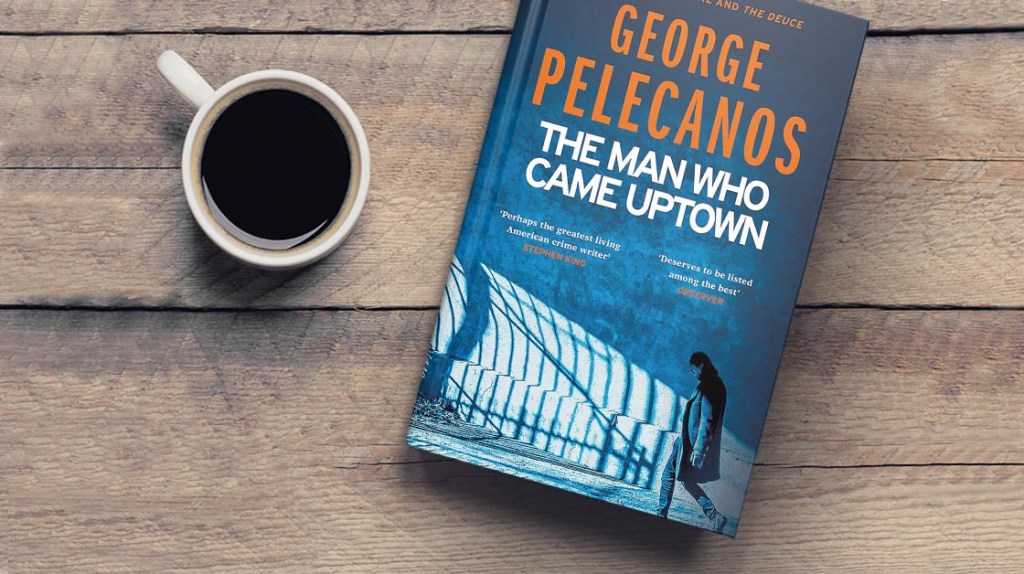
I enjoy George Pelecanos’s novels because they combine the socio-economic concerns of David Simon’s work (The Wire) with the procedural and street knowledge of an old school hustler, like Chester Himes or Iceberg Slim. It is by virtue of being the son of immigrants that Pelecanos’s childhood in Washington gave him access to the predominantly black working-class community and allowed him a uniquely empathetic and passionate perspective, something which would otherwise be denied to other crime writers of his generation. This, his twenty-first novel, is a stand-alone tale of three characters:
Michael Hudson – A newly released con with a fresh interest in reading which was identified and cultivated by his prison librarian.
Anna Bryce – The librarian spirit guide to dozens of Michael’s and, upon his release, symbolises a possible stability and tranquillity in his new life.
David Ornazian – A Private Investigator sliding into the grey area to whom Michael owes a favour.
The novel focuses on Michael’s re-integration into society and his old community where he grew up. After establishing Michael’s world (along with his hopes and his dreams) Ornazian and his depressingly predictable offer of work threatens to derail his planned rosier future. Michael manages to get a job in a successful diner and starts to make friends and plans for his future. Meanwhile, Anna is aware that he is now free and is now contemplating her own future with her husband. Ornazian’s plan to better himself involves pulling rip-and-runs on local dealers, the stakes of which are constantly rising.
Pelecanos’s strength is in writing detail and action. The stories he creates for his well-rounded characters never compel as much as the minutiae of the character profiles that he lovingly etches. You will know what these people wear (the brands), what vehicles they drive, what they smoke, what they eat, what firearms they use, but above all you will know what music these people listen to. And that music is essentially Pelecanos’s music, so a prospective reader should share a similar passion to fully appreciate his work.
At times Pelecanos’s writing is reminiscent of Brett Easton Ellis’s insanely detailed (but irritatingly obsessive) recitation of brands. But unlike Ellis, Pelecanos holds loyalty and goodness as the paramount qualities that his characters should possess. His detailing allows even the most monstrous individuals’ acts to be appreciated as a product of their life journey.
What makes The Man Who Came Uptown one of his best novels (that I have read) is that he ensures that the procedural aspect of his three protagonists stories is never overwhelmed by the emotional. The tribute to the power of reading (and its impact on offenders who take it up) is also an unusual detail that further grounds the events in the lived experience of the people in Washington.
An interesting side-note to add here is that Pelecanos once explained (at a Q&A session) that his writing style was based on listening. He would go into the bars, cafes and clubs and sit quietly listening to real people talk. This devotion to the authentic voice is what I think distinguishes him from the more successful but far less capable crime writers who pander to the masses.
 Gonzo Magazine
Leave a comment