
By Tony Frame.
Movies about music and musicians can be riddled with clichés. Even the good ones have a lot of the same traits – the struggling artist who has an addiction problem or suffers from intolerable insecurity, they have success and that success amplifies their inner demons and they begin to lose their passion for their art, for life itself. In some cases they make a comeback, they find themselves, and the music becomes a catharsis for their troubles. They live to fight another day and become the legend that we know them as.
That’s not to say that musicians who struggled with addiction and hardship (and everything else in-between) shouldn’t have their stories told, but certainly Hollywood does have a habit of churning their stories out in such a way that they feel like imitations of previous hits.
I’m sure you’ve all seen the usual suspects when it comes to this genre. Movies like Walk the Line (2005) and Ray (2004). They’re good movies in their own right, but they shouldn’t serve as blueprints for what makes a good story about a musician and their music. Each artist has an individual story within the clichés, and it seems that Hollywood just doesn’t want to remain true to those individual stories, they just love keeping it simple and making it a good formulaic rags-to-riches story, with or without a sad ending.
In this article I’ll publish films about music or musicians that excel above the rest, films that operate outside the formulaic confines that we’re so used to seeing. It’s a list that will be updated intermittently…
Backbeat (1994)
Director: Iain Softley
Writers: Iain Softley, Michael Thomas, Stephen Ward
Stars: Stephen Dorff, Sheryl Lee, Ian Hart
The Beatles – John Lennon, Paul McCartney, Ringo Starr and George Harrison; all of them musical icons from the twentieth century. Most of us know who they are and the music they made, but did you know that ‘the Fab Four’ was actually a five at one point early in their careers?
Well, Backbeat tells the true story of the fifth Beatle, Stuart Sutcliffe (played by Stephen Dorff), and the early days of the band’s struggle of making ends meet whilst playing in Germany. The film primarily focuses on Sutcliffe’s close friendship with John Lennon and the influence of German photographer Astrid Kirchherr, whom Sutcliffe dated. Kirchherr (played by the charismatic Sheryl Lee) photographed the band and played a big part in the Beatles unique look and style. Her iconic photography work has been exhibited around the world.
Production shots from Backbeat (1994). Images courtesy of IMDB


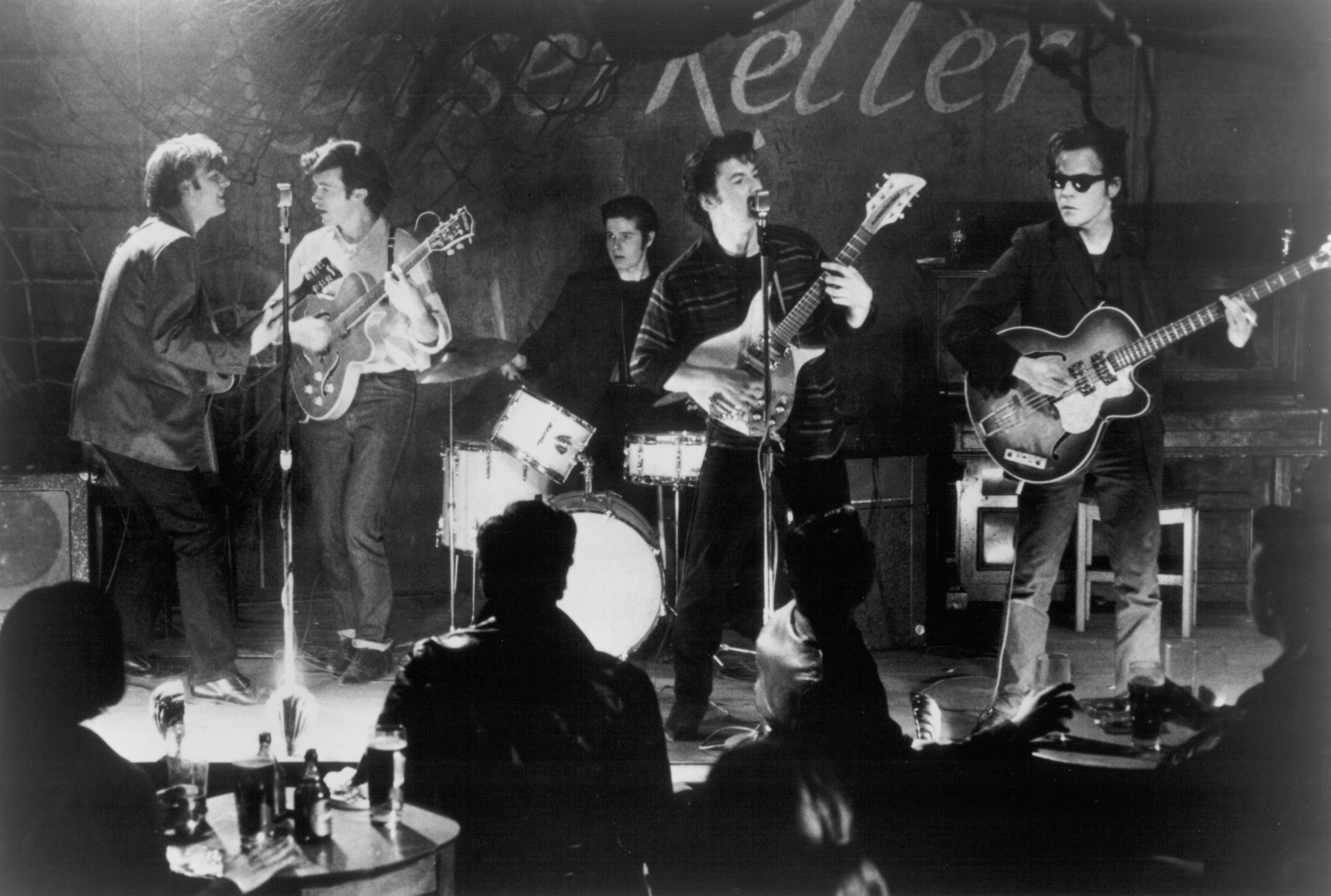
The great thing about Backbeat is that it offers a unique insight into those early days and months when the Beatles were living hand-to-mouth in Hamburg. Sutcliffe was a talented painter who played bass guitar in the band but he was conflicted about whether or not to primarily focus on his art or the music.
Very few films have been made about the Beatles, which makes this a fascinating watch in itself. The period detail (the locations, the sets, the fashion) is great considering it’s an independent (low budget) film, it transports you back to the ‘60s with an authentic feel. And whilst there’s no music of ‘the Fab Four’ featured in the film (due to copyright issues) you barely notice it, because it’s a story that is engaging primarily for its tempestuous relationship between Sutcliffe, Lennon and Kircherr. Everything else in the film is secondary.
Amadeus (1984)
Director: Milos Forman
Writers: Peter Shaffer, Zedenek Mahler (uncredited)
Stars: F. Murray Abraham, Tom Hulce, Elizabeth Berridge
Wolfgang Amadeus Mozart’s life story is brought to the big screen by legendary director Milos Forman in an extravagant tale of friendship, debauchery and betrayal.
F Murray Abraham plays an Italian composer (Antonio Salieri) who tells his life story about meeting Mozart (Tom Hulce) and being astonished at his remarkable musical ability, yet at the same time he’s disgusted with the man for his immaturity and philandering. A duplicitous friendship forms between the two which adds to a delightful (almost tongue-in-cheek) drama, but at the heart of it all is a love of musical excellence and of Salieri’s fascination with the titular character.
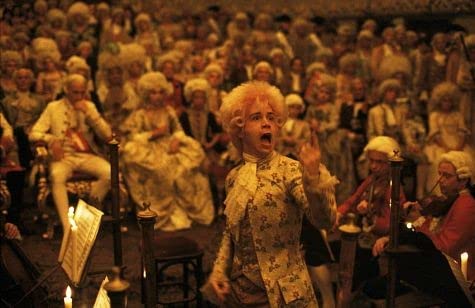
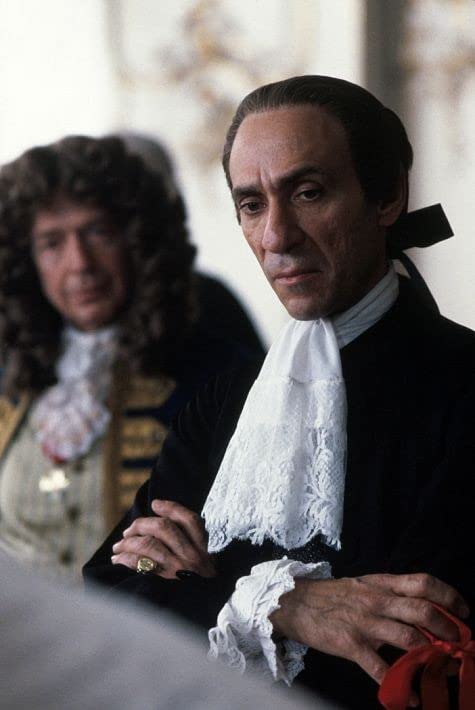
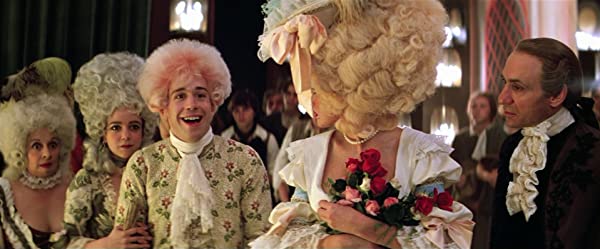
Stills from Amadeus (1984). Images courtesy of IMDB
Like most of Forman’s films it draws you in and keeps you glued to the screen with its remarkable screenplay and larger-than-life characters and outstanding performances. It’s a film that is not mentioned that often, despite its triumph at the box office and taking away numerous Academy Awards (Best Picture, Director, Actor et al). You don’t have to be a fan of Classical musical to enjoy the movie, but by the end of it you’ll probably have more of an appreciation for it, that’s for sure
Crossroads (1986)
Director: Walter Hill
Writer: John Fusco
Stars: Ralph Macchio, Joe Seneca, Jami Gertz
This is a road movie in essence. Road movies are a genre unto themselves. If done correctly (and avoiding the usual clichés) they can produce great stories and backdrops, and provide excellent character arcs and social commentaries (think Easy Rider, Thelma and Louise, True Romance et al).
Ralph Macchio plays a classical guitarist who is studying at Julliard. He’s something of a prodigy, but his love and passion for Blues is so overwhelming that he drops out of college when he befriends an old Blues legend called Willie Brown (Joe Seneca), and they make a deal to go in search of an elusive lost song.


Images courtesy of IMDB
It’s not all plain-sailing though; Willie berates his young sidekick’s Blues ability, saying that it takes more than just talent to make a great Blues player. Macchio (as fresh faced as ever in this movie, straight after his success in The Karate Kid), embodies the naivety and arrogance of his youthful character, who, despite his passion and talent for music, still has some growing up to do.
The constant bickering along the way with the two leads makes for great one-liners and witty and snappy dialogue. Jami Gertz (primarily known as Star in The Lost Boys) crosses paths with the two protagonists and she becomes the love interest in the story.
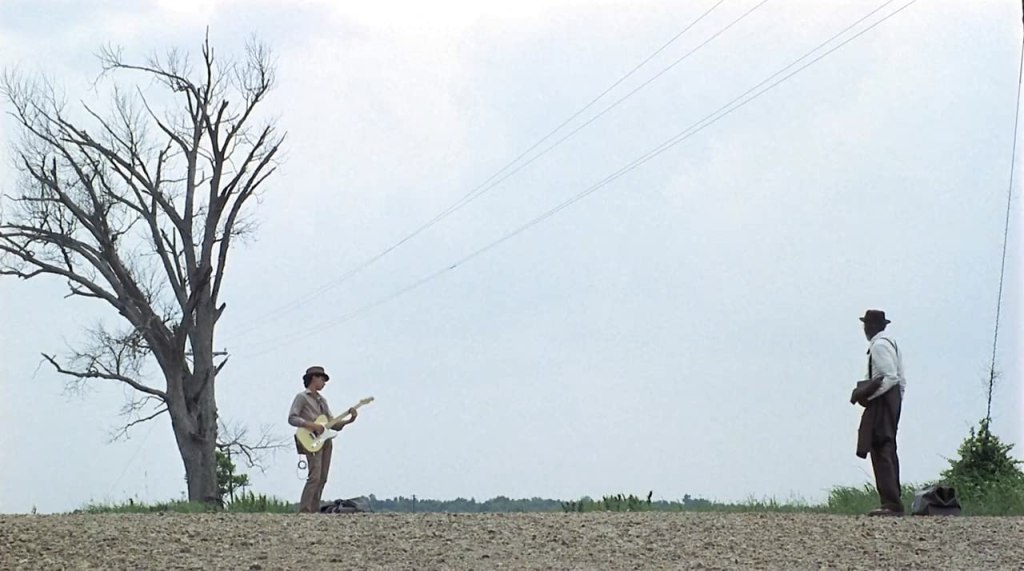
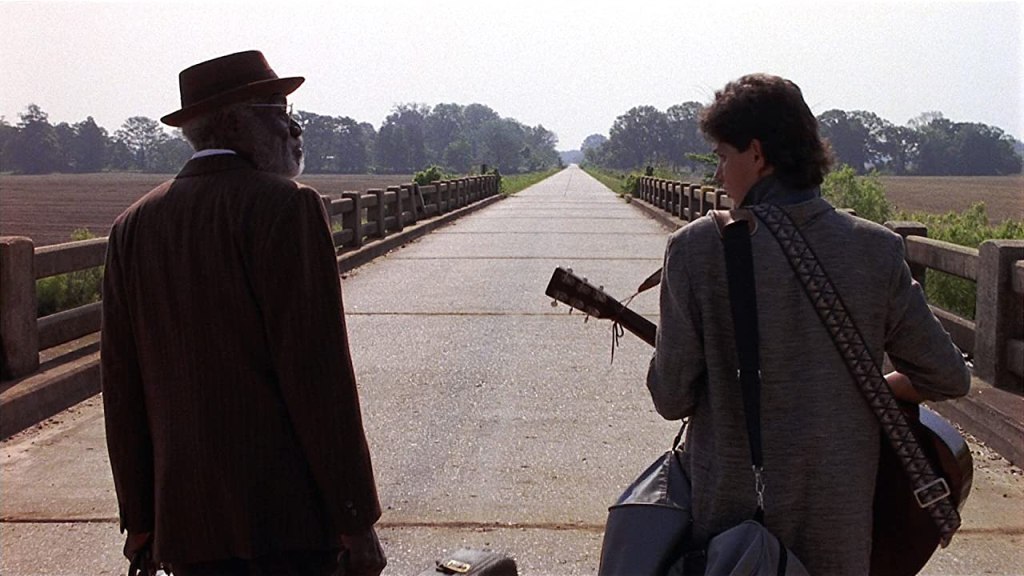

Now that all the ingredients are in the pot you would think that was it, but that’s only just the half of it. There’s something else in the story that keeps you intrigued – Willie keeps thinking back to his younger years, when he was just starting out, and when he made a lucrative deal at a crossroads in Mississippi. This was a pivotal turning point for him; success and fame soon followed after this deal but it was short lived, and now, years later, he feels cheated and is seeking out the crossroads and the person he made the deal with.
Walter Hill’s wide-shooting style (almost like a documentary) places you right into the drama as a viewer, keeping you engaged and entertained. Racism plays a role in the script as well, and it highlights black appropriation in the music industry which wasn’t really mentioned in mainstream movies in the ‘80s. The story is endearing in places and moves at a good pace, and the performances from all involved are filled with passion. None of the musical ensembles are badly dubbed or out of sync and you don’t doubt the Karate Kid’s guitar playing ability.
What makes Crossroads a great little fable is the characters, their believability, and the music. I’m not a huge Blues fan myself (I prefer Jazz – Miles Davis, Chet Baker), but this proves that you don’t have to really love that style of music to appreciate its importance and value.
Ultimately, it’s the ending where it puts the cherry on top of the icing; without spoiling it for anyone, let’s just say that if you don’t appreciate the power of music, and guitar-playing excellence, then you will definitely feel a touch of goosebumps after seeing the finale.
 Gonzo Magazine
Leave a comment